The Learning Lunch podcast explores ideas, approaches and social innovations – creating opportunity for non-profit organisations’ teams to discover what others are learning and space to reflect on what these insights might mean for their own strategy and programme implementation.
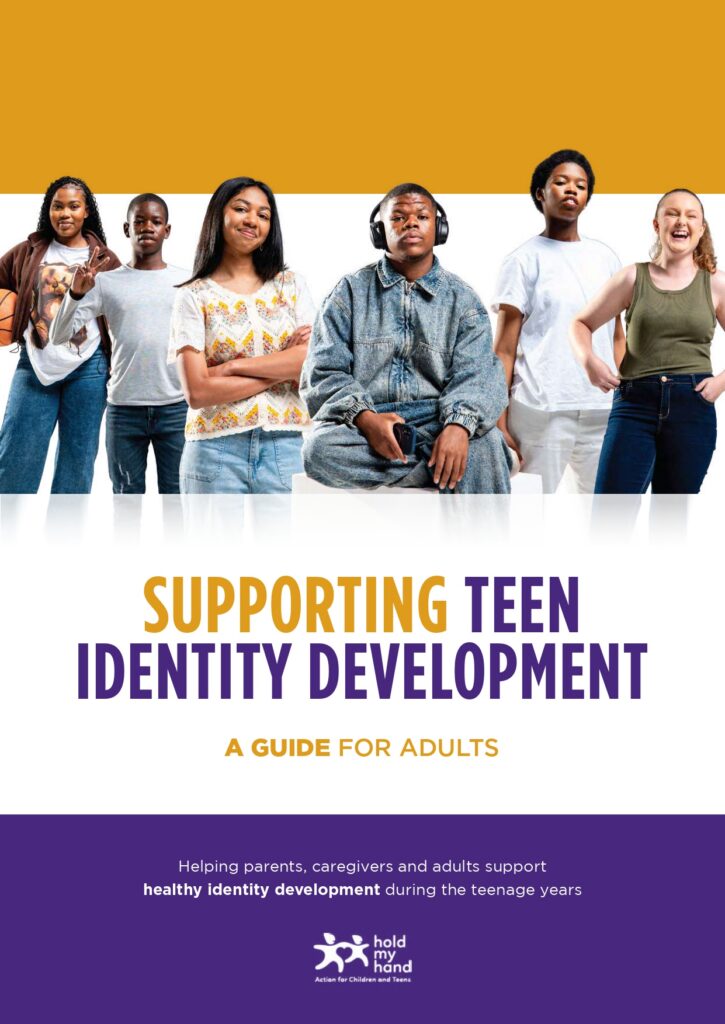
Teenage years are typically defined by change — moving from being a child to becoming an adult. At the same time, teens are forming a sense of who they are and where they fit in the world. This is important because when they understand themselves, they make better choices and feel confident and connected. This process is often thought of as an entirely personal journey. Instead, teenagers build their sense of who they are — made up of purpose, belonging, self-worth and agency — through the people and systems around them. This includes their family, friends, community and the services available to them.
When those support systems are missing, teens may struggle and turn to risky or harmful behaviour when things get hard. When those systems are strong, teens do better — they’re more confident, hopeful and resilient. And that doesn’t just help them; it helps their families and communities too.
Here’s the problem in South Africa: no single department is responsible for supporting teen identity, and although civil society has stepped in to provide adolescent-focused services and programmes in communities, they’re not comprehensive enough to reach everyone. What we need is a national response informed by an adolescent wellbeing framework.
In this episode, we talk to Shirley Eadie from the Hold My Hand Accelerator about why teen identity is a public policy issue.
Shirley Eadie is the lead for the adolescent identity accelerator within the National Strategy to Accelerate Action for Children, under the Hold My Hand Campaign.
Here are some complementary bites to make your meal even tastier
Who are you? Identity formation may be deeply personal, but it’s also a collective phenomenon. Consider South Africa’s own ongoing identity crisis. The country is pushed and pulled in every direction; our own anxieties seem to manifest, sometimes, in national headlines. We grapple with inequality. We try to reckon with a history of incredible cruelty. We reach back 26 years in search of the same hope that painted 1994 as a golden year. It hurts us. But no matter how uncomfortable the process, it also shapes us. So it is for young people’s collective identity crisis. They are hurt, and shaped, and enraged, and calmed and, ultimately, they become themselves – whatever that self may be.
In the third issue of the Human Factor we explored young people’s own stories – in their own words and through their own art. We delve into the secrets of their rapidly developing, ever-evolving brains. And we consider what might happen if, finally, we see young people as potent allies who are fully part of a society that’s as complex, changeable and profoundly beautiful as they all are. Download a PDF, or read it magazine-style on ISSUU below.